Get to Know the Breeds: Shetland Sheepdogs

History

Shetland Sheepdogs (“Shelties”) were originally bred by crossing the Border Collie and other Shetland collies, including the Rough Collie, with breeds such as the Cavalier King Charles Spaniel, the Pomeranian, the now-extinct Greenland Yakki, and quite possibly others besides. In the 1700s, Shelties were working dogs, mainly aiding farmers by herding sheep and acting as guard dogs. They were eventually introduced to mainland Europe, and by the 20th century they’d come to be considered great family companions.

Personality

One Smart Cookie
Hard-working and eager to please, the Sheltie is ranked sixth in Stanley Coren’s The Intelligence of Dogs—sharper than over a hundred other breeds. Coren claims that, on average, a Sheltie can learn a new command in under five repetitions and will obey a command on the first try 95% of the time.
Too Happy to Herd
One of the Sheltie’s most charming habits? The breed is hard-wired to herd. They’ll try to corral humans, other animals, and even cars, so be sure to keep a close eye on them out in the open—never let them run freely near busy streets or roadways.
Home is Where the Heart Is
Shelties absolutely adore their human families. Loyal and protective, they’re excellent with small children. A Sheltie’s defensive instincts make him wary of strangers—he is a guard dog, after all—and he’ll speak up to let you know when new people enter your home. If you’re on the receiving end of a little more protection than you need, don’t worry: your brilliant pup can easily be trained away from this type of behavior in no time.

Care

Work it Out
Shelties are active and inquisitive, and they’ll look to you for daily stimulation to release all that pent-up energy. At least one substantial walk or jog each day, plus a yard to roam, will keep them happy. If you don’t have a backyard, a vigorous game of fetch at the local park should do the trick.
Freshen Up
These handsome fellas love to look good. Their long coats should be brushed out daily with a little water to deter dust and prevent matting; an occasional bath is also a good idea. Note that the breed tends to shed heavily each spring and fall—but other than these seasonal sloughs, Shelties are actually rather average shedders in spite of their lush locks.
From a natural farmhand to one of today’s favorite family pets, the clever Sheltie has come a long way!
Get to Know the Breeds: Cavalier King Charles Spaniel

History

The Cavalier King Charles Spaniel is named for King Charles II of Britain and descended from the King Charles Spaniel. In the late 17th century the King Charles was bred with pugs, creating a smaller, more flat-nosed dog with bigger eyes. In 1920s London, a prize was offered to anyone who could present a King Charles Spaniel with a longer nose, honoring that of King Charles II himself, as depicted in Sir Anthony Van Dyck’s paintings. The winner was a dog named Ann’s Son, owned by Mostyn Walker. The modern version of the King Charles was given the name Cavalier King Charles Spaniel, and classified as a separate breed in the 1940s.

Personality

Tails Always Wagging The Cavalier King may have royalty-inspired origins, but he won’t snub anyone. He’s a happy little guy, always up for some company. He’s as social as a dog gets with people, dogs, and other animals alike.
TV or the Park? These guys are people pleasers, and can always intuit what you want from them. They’re up for anything, whether it’s a run in the park, curling up on the couch next to you while you read a magazine, or watching the latest episode of Mad Men.
Dog on the Run One tricky thing about the Cavalier is his tendency to chase after things. This means he’s always up for a game of Frisbee, but letting him off the leash can be dangerous in an open area. He’ll chase after anything, from a tennis ball to a Toyota to an airplane, so be careful!

Care

Apartment Compatible The Cavalier is a little guy and can get along in an apartment just fine. A fenced-in backyard is nice, but as long as he gets a daily walk and has some space to run around indoors, it’s not mandatory.
Squeaky Clean Cavaliers need to be brushed at least once a week, and should receive an occasional bath. His coat gets tangled pretty easily, so be sure to check it often. With a name like Cavalier King Charles Spaniel, these guys clearly are superior pets. They become more and more popular every year and make perfect companions.

Get to Know the Breeds: Pomeranian

History

The Pomeranian gets its name from a part of Europe known as Pomerania—now part of Poland and Germany. Bred here from ancient Spitz dogs, the Pomeranian was once much larger and used for herding sheep. In 1888 Queen Victoria acquired a small Pom, increasing its popularity in England. Other notable Pomeranian owners include Mozart, Marie Antoinette, Émile Zola, and Napoleon.

Personality 

Extroverted
The Pomeranian is extremely outgoing. He’s eager to please and a real people-lover, with high energy that makes him endlessly entertaining. His friendly attitude also contributes to his reputation as a stellar show dog.
Loves Thy Owner
The Pom Pom (as they’re sometimes called) gets very attached to his owner. He can become protective, and sometimes suffers from separation anxiety when left alone. He just wants to be with you all the time!
Smarter Than You’d Think
These little guys may come in small, fluffy packages, but they’re highly intelligent. They are quick learners, respond well to training, and are always aware of their environment. They pick up easily on tricks, and are good at getting what they want from their owners (the fluffy cuteness doesn’t hurt).

Care 

A Walk a Day
Pomeranians don’t need much exercise, and will receive most of it through play. However, they have a ton of energy, and would love a good walk at least once a day.
Daily Brushing
The Pomeranian’s long double coat needs to be brushed on a daily basis. His undercoat will shed twice yearly, but his overcoat sheds on a regular basis. That’s a lot of fur, but it’s on a little frame—making the brushing fairly quick and easy.
Attention!
These guys don’t like to be left alone. They always want to be the life of the party and love all the attention they can get. Loneliness can lead to behavioral problems in Poms, so be sure to include them in family activities and outings.
Pom Poms are fun-loving dogs with great attitudes and awareness. They love their owners and are extremely loveable themselves. For a little dog, the Pomeranian has an enormous personality.

Get to Know the Breeds: Chihuahua

History

The Chihuahua is the oldest breed of dog in the Americas, and the smallest breed in the world. Its name originates from its Mexican state of origin, but the Chihuahua’s history is fairly unknown. It’s thought to have been bred from the Fennec fox because of its small size, wide eyes, and big ears, but its exact origin is a mystery. These guys were prized pets of the upper classes in pre-Columbian Indian nations, and weren’t brought to Europe until the end of the nineteenth century.

Personality 

A Good Pal
The Chihuahua is a good companion and enjoys being around people. He’s extremely loyal and good-natured—a good thing, because it’s hard to be around a Chihuahua without wanting to pick him up.
Smart and Energetic
Chihuahuas are intelligent dogs that learn quickly to obey and react well to positive reinforcement.  They have a lot of energy and are very agile.
A Chihuahua Likes His Own Kind
These little guys need to be watched around young kids and other dogs. They require a lot of patience when getting used to children, but can learn to get along well with anyone. When it comes to hanging out with other dogs, they prefer the company of their own breed, but again, with a little bit of patience and care, they can hang with anyone, even the enormous Great Dane!

Care

City Slickers
The Chihuahua is a good choice for apartment dwellers because of his tiny size. He’s well-adapted to city living, though he does need a little space to roam around. He dislikes the cold and does best in warm weather.
A Little Exercise
Even though it’s tempting to carry your tiny Chihuahua, he still needs to be walked like any other dog. A good stroll once a day will give him the exercise he needs, and he loves a game of fetch in the park just as much as the bigger guys.
Coat Care
Your Chihuahua can wear his coat long or short, depending on how often you want to tend it. Long coats need daily attention, while short-coated Chihuahuas can get by with the occasional brushing.
The Chihuahua is called a “purse dog” for a reason: he’s pretty much pocket-sized, and can be easily transported in a reasonably roomy purse. Among the more well-known Chihuahuas who have enjoyed this mode of transportation is Tinkerbell, Paris Hilton’s purse-riding pup.

Get to Know the Breeds: Great Dane

History

The Great Dane (aka German Mastiff or Danish Hound), originally bred in Germany for hunting deer and wild boar, is one of the tallest dogs in the world. They’re also one of the oldest breeds—drawings of them appear on Egyptian monuments dating back to 3000 B.C. Nicknamed “The Apollo of all dogs,” and sometimes “king of dogs,” they weigh close to 200 pounds and can stretch out to be 7 feet or taller.
The tallest dog in the world today is a Great Dane named Zeus, who stretches out to be 7 foot 4, weighs 155 pounds, and eats 30 pounds of food a day. The previous record holder was another Great Dane, named “Giant George,” who was one inch shorter than Zeus.

Personality 

Gentle Giant
Although Great Danes are huge, they’re also really sweet. They are very friendly and sociable both with people and with dogs and other pets. They’re also extremely patient with children (even those who try to ride them like a horse!).
Loyal and Soft Spoken
Great Danes love their family and aim to please. They rarely bark unless there is cause for alarm, making them great watchdogs. They’re friendly, but will be cautious of any strangers they encounter.

Care 

Long Legs Need a Long Walk
These big guys need a good amount of exercise on a daily basis. At least one long walk a day should keep them content—but care should be taken not to overwalk them while they’re still puppies!
Daily Brush
Great Danes shed very little and can be brushed just once a day. Their enormous size makes them difficult to bathe, so an occasional dry shampoo treatment is recommended.
Pop Culture Pedigree
Great Danes are impressive-looking dogs with a long history. The Great Dane was the inspiration for the Scooby-Doo cartoon and for the companion to Hagrid in the Harry Potter series (though he was played by a Neapolitan Mastiff in the movie). THey are loving and friendly, and make amazing family pets.

Get to Know the Breeds: Siberian Husky

History

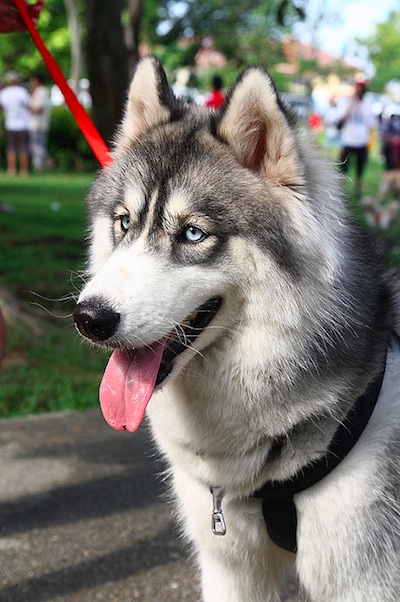
One of the oldest breeds in the world, the Siberian husky has its roots in the eastern Siberian peninsula as a sled dog for the Chukchi tribe. They were brought to Alaska by fur traders for racing, but gained popularity in 1925 during a diphtheria epidemic in Nome, Alaska, where they were used to deliver serum from Nenana (over 600 miles away). In 1933 Admiral Byrd used Siberian huskies for his Antarctic expeditions, and during WWII they were used for the US Army’s Arctic search and rescue unit.

Personality

Gentle Giant
The Siberian husky is a big dog with wolf-like features, but he is very loving. He’s easy going, great with kids, and an all around sociable dog.  He’s cool with strangers and likes to be around other dogs.
Sharp as a Tack
Siberian huskies are some of the smartest dogs you’ll ever pet. They can be very easy to train but can also easily get bored because of their heightened intelligence. If they’re kept on their toes and are constantly learning new things, it shouldn’t be an issue.

Care 

Not Hungry Like the Wolf
Don’t be fooled by the Siberian husky’s wild wolfish features – he’s not as carnivorous as he looks. In fact, these guys are pretty light eaters and like to spread their meals throughout the day. Not that you should feed them less often than other dogs, you just don’t need to feed them more often.
Weekly Brushing 
Siberian huskies have very thick coats that need to be brushed at least once a week. The thick coat is what keeps them warm in the cold Arctic climate, but it also reflects heat in the summer time. It tends to shed twice a year at which point you’ll need to brush them daily, until the shedding period ends.
Let Him Run 
These guys have a lot of energy and love a good release. Having a yard for them to josh around in is ideal but a daily walk or jog is also good. They’re willing to play and exercise for long periods of time, but be careful when the weather is warmer so they don’t overheat.
The Siberian husky is a sharp dog that can sometimes have two different colored eyes – one brown, one blue (how cool is that?). They look like wolves but don’t need to be feared like them. They like good company and just want love and affection.

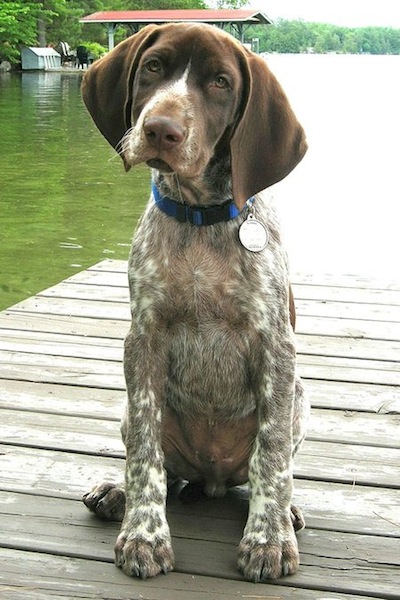
Get to Know the Breeds: German Shorthaired Pointer

History

While the exact origin of the German shorthaired pointer is unclear, it’s believed to be derived from the German bird dog and crossed with German scent hounds and other hunting dogs. Early on it was crossed with the English pointer, resulting in a fast, agile all-purpose utility dog with a good nose and a sharp mind for hunting. The German shorthaired pointer is ideal for hunting game, both on land and in water, but also an excellent family companion in the home.

Personality

Quite Accommodating
These guys were raised to be hunters and obey orders, so by nature, they are eager to please their owners. The GSP loves to make his family happy and is game for pretty much anything, from a game of fetch, to a run in the park, to a swim in the ocean.
Sharp Wit
One of the smartest breeds in the bunch, the German shorthaired pointer is always on top of his game. He is smart and as quick witted as a dog can be, taking on responsibilities with an intuition unmatched by other canines. Author Thomas Mann expressed his love for the German shorthaired pointer in his book Bashan and I.
Looking For a Friend
The GSP is always out to make new friends and gets along well with other dogs and children. He loves to hang out and is an excellent companion for you, your child, and even your golden retriever.

Care

Keep Him Moving
While capable of adapting to pretty much any living situation, the GSP needs his exercise. He needs at least one long brisk walk a day, or a jog, or even to accompany you while you ride your bike. He needs a family that is willing to play with him outside, and allow to him to work his muscles and let some of that energy out.
Let Him Drink
Water, that is! These guys are super active and will run themselves crazy. Be sure to give them proper amounts of water, because dehydration is a common problem for these guys, and nobody wants a thirsty dog!
Grooming is Gravy
The smooth coat of the pointer sheds very lightly and only needs a light brushing on occasion. Bathe only as needed, but be sure to give him a good wash if he’s been out on a hunt. Check his floppy ears regularly to be sure they’re clean – they’re prone to ear infections.
The German shorthaired pointer’s history may be a bit of a mystery, but his companionship and happy-go-lucky attitude are a sure thing. These floppy-eared fellas are some of the best dogs to make your best friend.

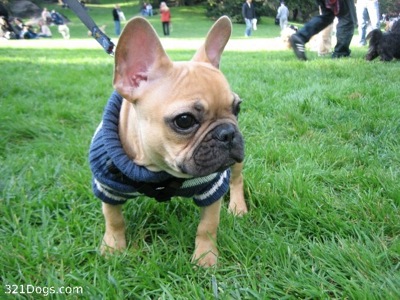
Get to Know the Breeds: French Bulldogs

History

Despite its name, the French bulldog originated in Nottingham, England during the 19th century, when lace makers decided to make a smaller version of the English bulldog, referred to as a “toy” bulldog. Kept simply as a companion, when many of these lace makers were displaced by the industrial revolution, they brought the dogs back to France, where they became fashionable. Eventually there were hardly any toy bulldogs left in England, and the French decided to call the little guys French bulldogs.

Personality

Sweet and Loving
The French bulldog loves to be around people and is very affectionate. He dislikes being ignored and just wants to be around you all of the time. He loves his owner and gets along great with children.
Soft Spoken
These little guys don’t have much bark or bite. They tend to be pretty quiet and will only bark to alert you if they need something, or they think there’s danger lurking about.
Loves a Good Book or Watching the Tube 
French bulldogs are lap dogs and don’t mind being just that. Yes, they want to be around you, but they don’t mind cuddling up next to you while you read Harry Potter or watch the latest season of Downton Abbey.

Care 

A Daily Walk
The Frenchie doesn’t need a ton of exercise but will play and run around out in the yard if you let them. They need to go on a walk at least once every day. They like to be shown around town by their owner, and can get very cranky if they’re always kept home.
Keep ‘Em Out of the Kitchen
They can’t take the heat! Their little squished faces make the French bulldog prone to respiratory issues. When it’s hot out keep an eye on them, they are susceptible to heat stroke and can run out of breath very easily. They also gain weight easily, so be careful not to overfeed them.
Clean Living
His very smooth coat sheds very little, and a good brushing every now and then should do the trick.
The French bulldog is adorable with his tiny little body and big bat-like ears. He makes the perfect companion for everyone and is really easy going. Need a play date? He’s up for anything!
 

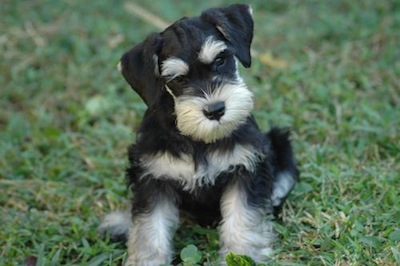
Get to Know the Breeds: Miniature Schnauzer

History

The miniature schnauzer is a German breed of the schnauzer variety that came to be in the late 19th century. Originally intended as farm dogs, for their ability to easily run the fields catching all types of vermin, the miniature was created by crossing small standard schnauzers with affenpinschers (and possibly poodles) to create a smaller schnauzer for controlling household vermin.
The name schnauzer comes from the German word “schnauze,” which translates to muzzle, probably for its strong muzzle.

Personality

Friendly and Cheerful
Don’t be fooled by that angry looking mug, the miniature schnauzer is a happy go-lucky dog that loves a good time. He enjoys being around people and is excellent with children.
Big Bark, No Bite
The miniature schnauzer can be a very vocal little pal. He’ll bark if he feels endangered, but sometimes he barks just to greet you or any of his friends. He barks when he’s excited and he barks whenever he wants to express any sort of emotion. He’s talkative.
Smart and Playful
The miniature schnauzer is highly intelligent and learns very quickly. He’s easy to train, and always up for a good game of fetch. He’s got a lot of energy.

Care

That Double Coat Needs A Brushin’
The miniature schnauzer wears a double coat of wiry fur on top and soft fur on the inside. It’s not hard to brush, but should definitely be combed or brushed on a daily basis. Any matted hair should be cut.
Spring Cleaning
Twice a year, in the spring and the fall, the mini schnauzer should be given a good haircut. Cut around the eyes and ears and keep the hair short on the body. Let their beard grow (that’s kind of their thing!) but keep it clean and contained.
Long Walks
These guys have a lot of energy and need to get it out. They should be taken on long walks or jogs daily and be played with as much as possible. A good run or some time in a park is good for these little fellas.
The miniature schnauzer may be small but he’s full of energy and speaks his mind. His bark is bigger than his bite; actually, he doesn’t bite at all!

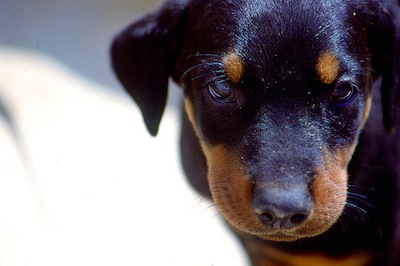
Get to Know the Breeds: Doberman Pinscher

History

Bred in the late 1800s as a guard dog, the Doberman pinscher was created in Apolda, Germany by Karl Friedrich Louis Dobermann. Dobermann was a tax collector and often had run-ins with bandits, so he decided to create a dog that would serve as his guard and watch dog. He crossed several different breeds including German pinschers, Rottweilers, Beaucerons, Manchester terriers and Greyhounds.
During WWII, the Doberman pinscher was the official dog of the United States Marine Corps.

Personality

Loyal and Playful
Dobermans may have originally been bred to be guard and watchdogs, but over the years their aggressive nature has been toned down, allowing for them to be one of the most desirable housedogs in the world. They are extremely loyal pups who love attention. Hanging out with their family and friends is an absolute must for these guys.
Protective 
Dobermans love their family and will not hesitate to protect them from danger. If a Doberman feels his owner or pal is being threatened he will step in. These guys are a little wary of strangers but with enough training and socializing they learn to become more comfortable with outsiders.
High IQ
Many studies have shown the Doberman to be one of the most intelligent dogs in town. Their ability to problem solve on their own and follow their master’s orders is remarkable. This makes training them a lot easier than other canines.
Strong & Energetic
Doberman pinschers have a lot of energy. These guys are always on the move and up for anything. They are strong, fast and full of stamina. They’re not the type to just sit around the house watching reruns of Matlock with you, take ‘em for a run!

Care

A Nice Yard
While Dobermans will do okay living in an apartment, as long as they get enough exercise, having a yard for them to play in doesn’t hurt. They love to run and play and really need to get that energy out!
Keep Them Warm
Dobes are very sensitive to the cold. Do not leave them outside during the winter months and make sure to keep them cozy indoors. Make their walks or runs a little shorter when the temperature drops.
Keep Your Dobe By Your Side
Again, Dobermans love to run and are extremely strong. Be sure to take them for long walks or jogs and remember- they must be kept at your side at all times and made to sit down if you need to stop. If you allow the Doberman to run ahead of you he’ll assume he’s leading the way and try to pull you ahead.
Your Doberman is your best friend. He’s loyal, smart, strong and protective. While he may need a little training, he’s worth the small amount of work. Luckily he’s super smart and he learns really fast!